Goyal has the baton. Now he has to run with it
Goyal is the quintessential advertising maverick and understands advertising, entrepreneurship, technology and AI
 by
by
Published: Oct 1, 2026 9:27 AM | 6 min read
 Follow Us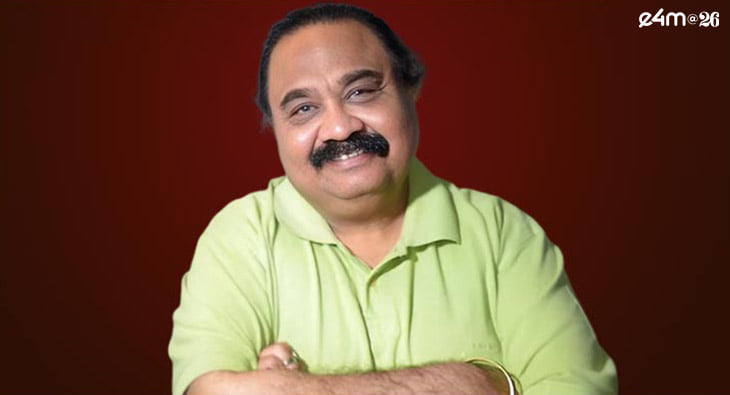

- Dr. Sandeep Goyal has been appointed as the new president of the Advertising Agencies Association of India (AAAI), succeeding amid significant changes in the advertising industry, particularly due to advancements in technology and AI.
- Goyal is recognized for his extensive experience in advertising, entrepreneurship, and technology, and is expected to involve younger leaders to address the industry's evolving landscape and attract new talent.
- His immediate focus will be on integrating AI into advertising practices while maintaining the essential human creativity, as well as enhancing the industry's appeal to younger professionals and fostering a generational bridge within AAAI.
- Goyal faces the challenge of managing diverse expectations from various agency sizes and business models, emphasizing the need for consensus-building and a clear, actionable agenda to drive meaningful change in the industry.
After all the stormy and steamy conversations around the Lifetime Achievement Award, the Advertising Agencies Association of India now has a new president in Dr Sandeep Goyal. And perhaps the most interesting part of his appointment is not just the person who has taken over, but the timing.
Goyal is the quintessential advertising maverick and understands advertising, entrepreneurship, technology and AI. He has tremendous linkages with policymakers and the government.
He has associations with diverse sectors, industries, ideas and people. Goyal has the drive, desire and distinction of being a creative and entrepreneurial person.
He could do the right thing by involving younger leaders from the creative and business sides, bringing younger leaders and their ideas to the fore.
Advertising is going through one of its biggest changes in decades. Artificial intelligence is changing the way ideas are created, content is produced and campaigns are planned. Consumer attention is fragmented. Media is becoming increasingly complex. Young professionals entering the industry are looking at careers differently. And agencies themselves are questioning where their next phase of growth will come from.
So, Goyal has not inherited an industry waiting for business as usual. He has inherited an industry that is looking for direction.
The first challenge, therefore, is expectations. Goyal has always been a vocal professional. Even when he was outside AAAI, he was willing to question, provoke and suggest new approaches. He often played from the front foot. Now he is no longer an outsider commenting on what the association should do. He has taken the baton. The industry will expect him to convert those observations into action.
But that cannot happen in twelve months.
One of the biggest mistakes any industry association can make is to judge a new leadership team only by what it achieves in one year. Structural changes take time. Goyal and his committee need a reasonable two-year window to implement their agenda, build consensus and demonstrate results. The association needs continuity rather than a cycle where every new leadership team starts afresh before the previous ideas have had time to mature.
Goyal's immediate priority will inevitably be technology. AI is no longer a subject that the advertising industry can discuss as something happening somewhere outside the agency. It is already changing creative processes, production, media planning, research and even client expectations. The question is not whether AI will affect advertising. It is how agencies will use it without losing the human thinking and creativity that remain at the heart of the business.
This is where AAAI can play a useful role. Instead of merely conducting conversations around AI, it could create practical learning platforms where agencies understand what AI means for different functions. Creative people need different skills from media planners. Account management needs a different understanding from production. Smaller agencies may have completely different requirements from the large networks.
The second major challenge is talent. Advertising has always attracted young people because it offered an environment of ideas, excitement and experimentation. But today's young professional has many more career options. Technology companies, start-ups, content businesses, consulting firms and digital platforms are all competing for the same talent.
AAAI therefore needs to make the industry more attractive to the next generation. That means bringing young professionals into the association itself, not simply inviting them to attend seminars. If Gen Z is going to be one of the industry's most important audiences, AAAI should also have people who understand how Gen Z thinks, communicates and consumes information.
The association needs a stronger generational bridge. Experience is valuable, but experience alone cannot define the future.
Another area where AAAI can make a difference is knowledge. Indian advertising has demonstrated its creative strength globally for many years. But global recognition cannot be built only through awards. The industry needs greater exposure to international thinking, new business models, technology, consumer behaviour and emerging communication practices.
AAAI could therefore create more knowledge-led platforms involving global professionals, academics, marketers and technology leaders. The objective should not be another award ceremony or another industry gathering where everyone speaks to everyone they already know. It should be about bringing new thinking into the Indian advertising ecosystem.
Goafest will obviously remain an important AAAI property. But the association should think beyond Goafest. An industry association cannot become relevant only for a few days in a year. It has to remain useful throughout the year.
This also means looking at the larger advertising ecosystem. Agencies do not operate in isolation anymore. They work with media companies, technology platforms, production houses, influencers, content creators, data companies and an increasingly complex marketing ecosystem. AAAI has an opportunity to become a stronger voice for the industry on issues that affect all these stakeholders.
There is also a larger question around the role of advertising in society. Goyal has spoken about using communication capabilities for social causes. This is an area where the industry can make a meaningful contribution. Advertising has enormous creative and communication power. Using some of that power for issues that affect society can give the profession a purpose beyond selling products and services.
But perhaps Goyal's biggest challenge will be managing expectations within the industry itself.
AAAI represents agencies of different sizes, different business models and different priorities. What matters to a large multinational network may not necessarily matter to a small independent agency. Digital-first agencies have different concerns from traditional agencies. Mumbai and Delhi may have different industry dynamics from Bengaluru, Chennai, Hyderabad or other markets.
The president therefore has to be a consensus builder as much as a change agent.
And that may be the real test for Goyal. The man who was once able to speak freely from outside the system now has to bring different voices together from inside it.
He should also resist the temptation to do too much too quickly. A clear five-point agenda executed properly will have far greater impact than twenty announcements that struggle to move beyond the conference room.
The advertising industry does not need another year of discussions about change. It needs some visible changes.
It needs better skills. It needs stronger global exposure. It needs younger leadership. It needs to understand AI without fearing it. It needs to create more opportunities for agencies beyond traditional advertising. And it needs an association that is relevant not just to the established leadership but to the professionals who will shape the industry ten years from now.
Goyal has spent enough time raising questions from outside. Now he has the platform to find some answers.
The past, including all its controversies and conversations, should perhaps be left behind. The new president has a year to begin the journey, but he needs the space to think beyond a year.
The baton is now firmly in his hands.
The industry will not be looking only at how fast he runs. It will be watching where he takes AAAI.
If there is one man who can transform AAAI and lead from the front, it’s Sandeep Goyal.
Dr Annurag Batra is Chairman and Editor-in-Chief of BW Businessworld and Founder of the exchange4media Group.
Read more news about Internet Advertising India, Marketing News, PR and Corporate Communication News, Digital Media News, Television Media News
For more updates, be socially connected with us onInstagram, LinkedIn, Twitter, Facebook YouTube & Google News
